






Bor uzuuriin khuree
Read in Mongolian
Name(s) of Temple :
Bor uzuuriin khuree ,Bodonchiin khuree,
Tibetan name(s) Cyrillic (DOMM 2007):
Дашпунцаглин
Tibetan name Wylie:
*bkra shis phun tshogs gling
Rinchen Number :
43
Rinchen Name :
Bodonchiin khuree, Gun tolgoin khuree, Dashpuntsaglin
Type of Monastery/Temple:
Monastic School
Aimag where the temple is located:
Khovd
Sum where the temple is located:
Altai soum
Old Aimag Name :
Zasagt Khan
Old Khoshuu Name :
Zakhchin khoshuu
Description of location :
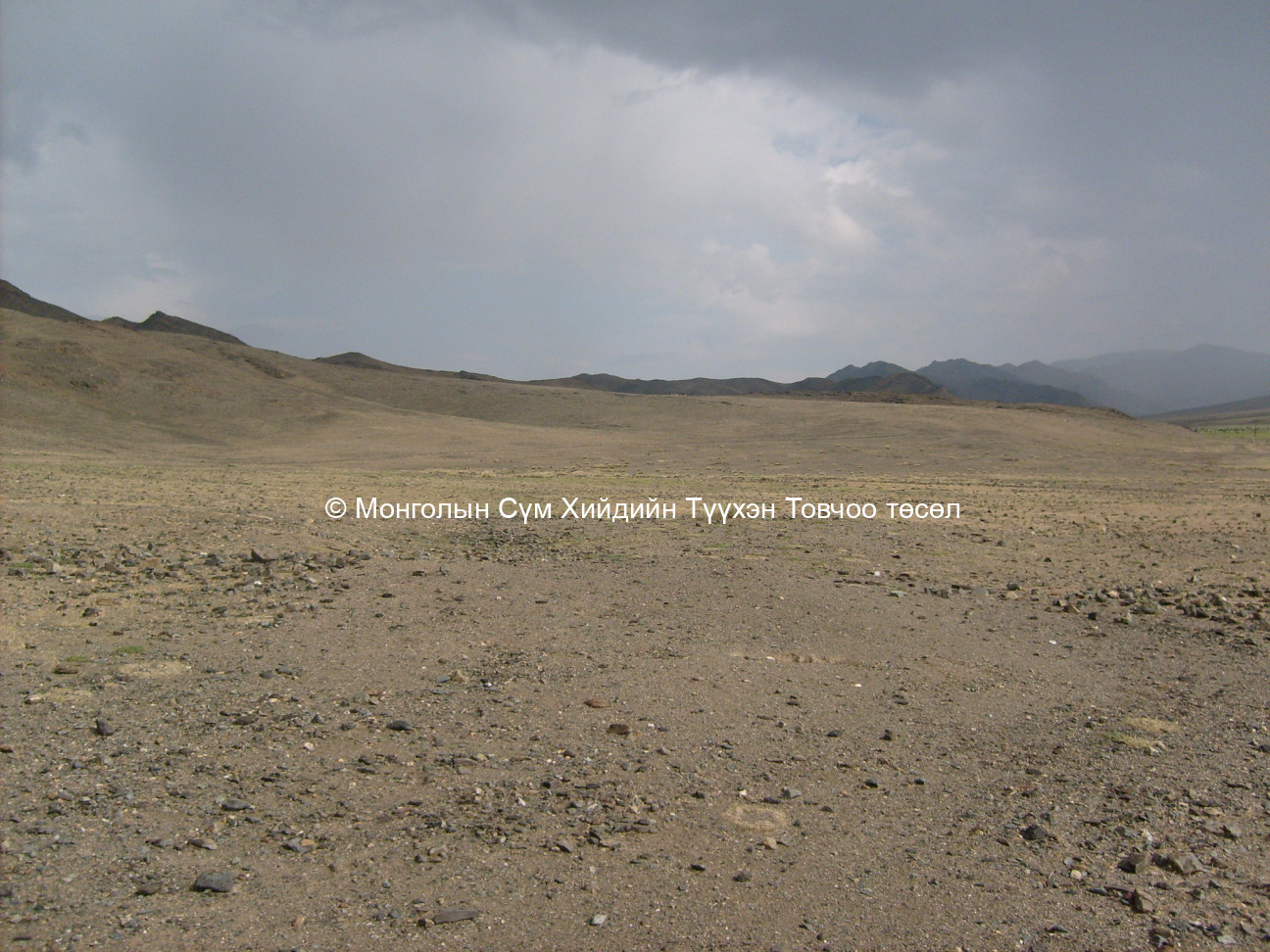
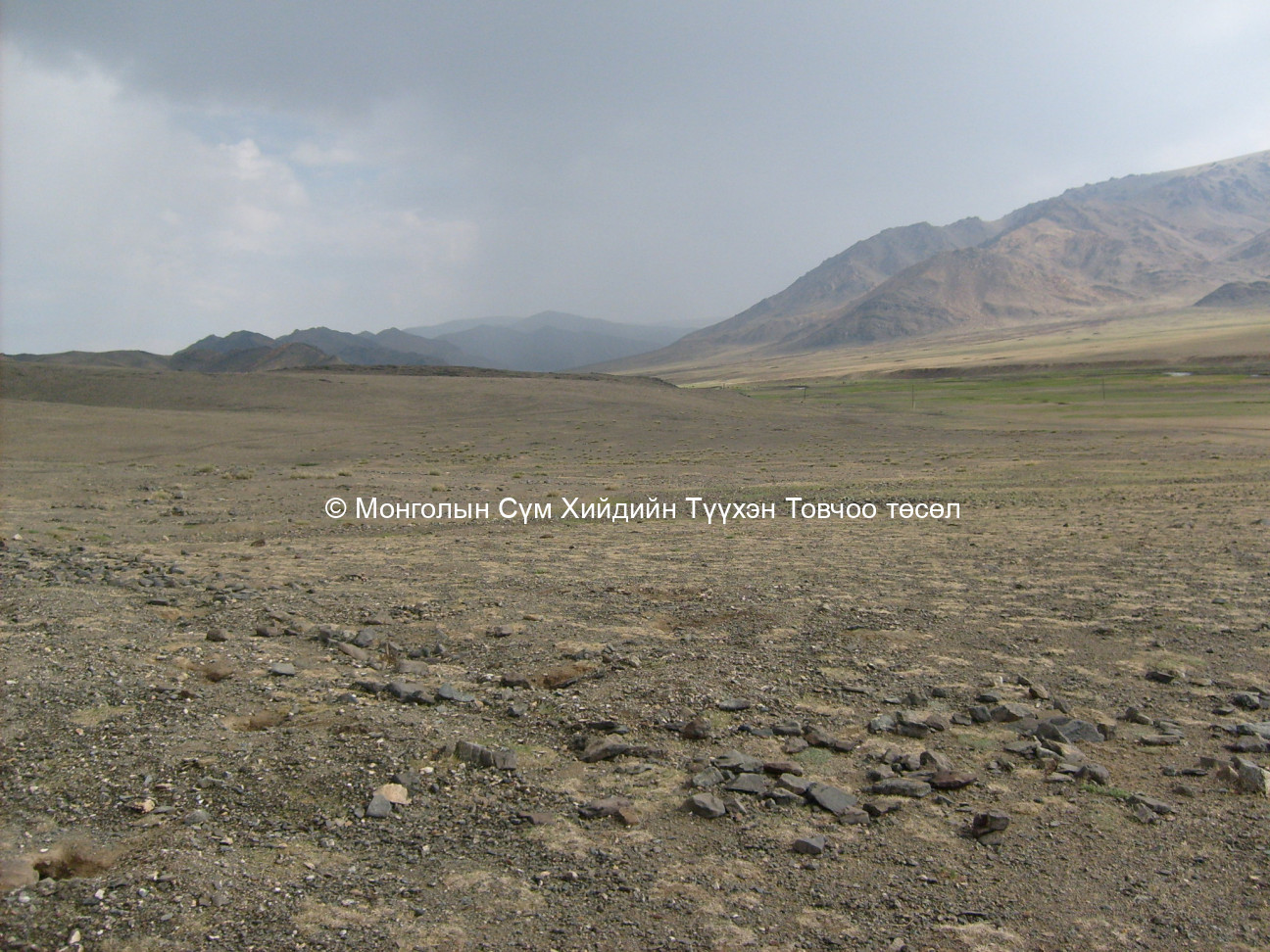
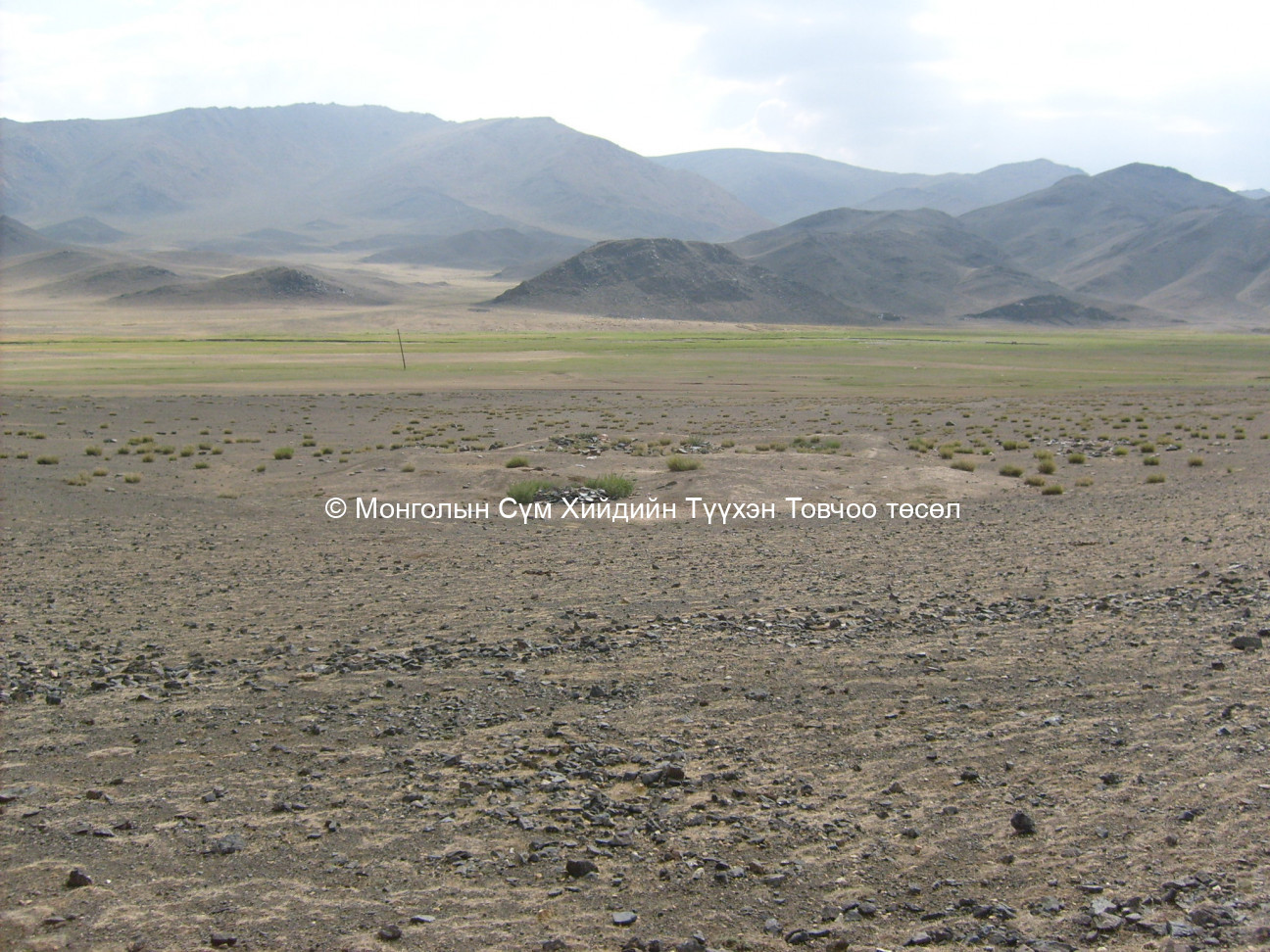
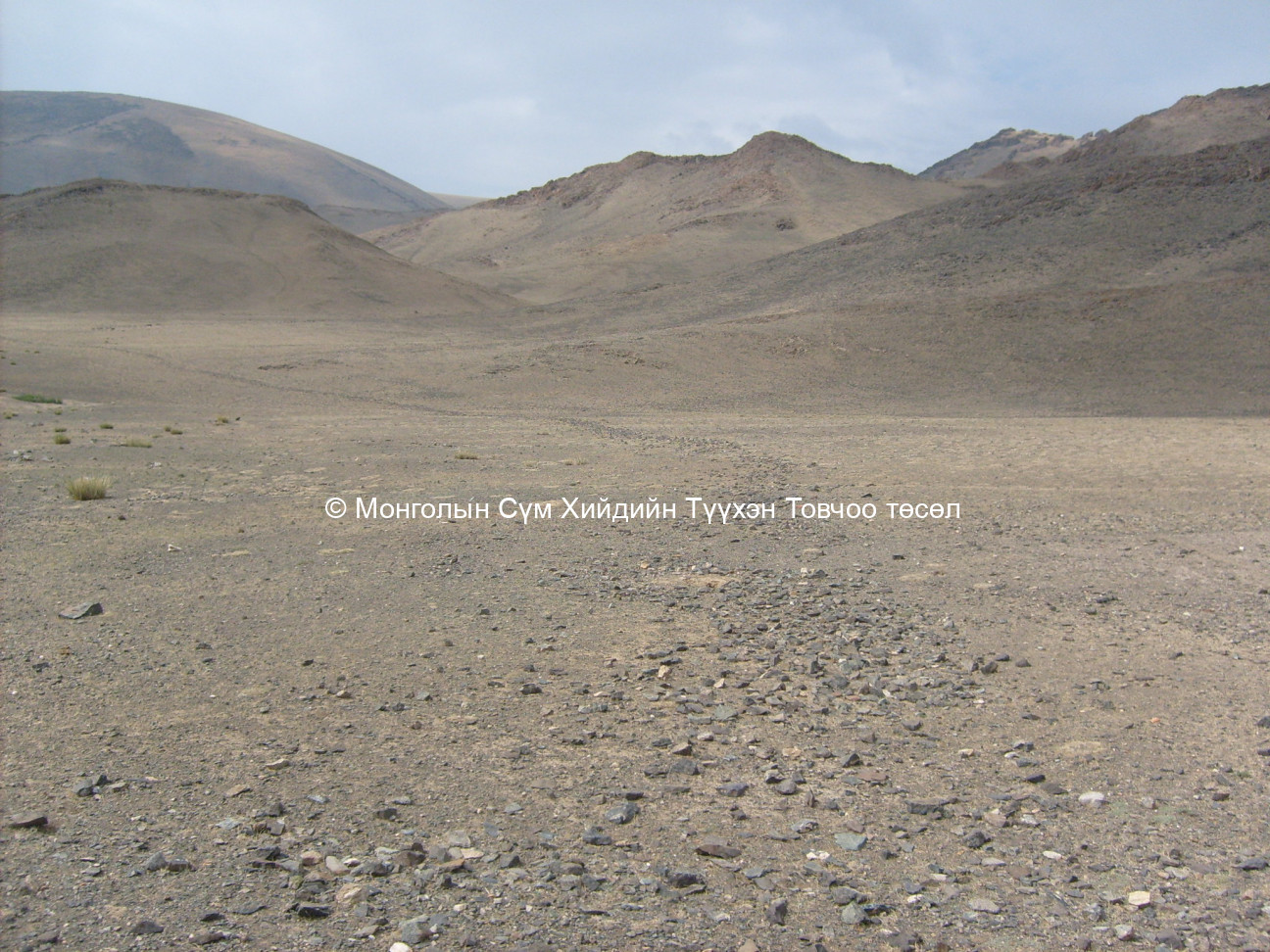
The historic site “Bodonch Monastic city” was located in the Altai Mountain range on the shoreline of Bodonch River which flows through the Mongol Altai Mountain range. The Bodonchiin River streams through a lofty gorge which is surrounded by tall mountains on both sides. The gorge name is Bodonchiin Khavtsal. About 1 km. behind the monastic city base is the Khujirt brigade centre of Must sum. Thus the Bodonch monastic city is at the junction of Altai and Musd sums. The Bodonch river flows to the mouth of the Bodonchiin Khavtsal which also means that the monastic city is in the mouth of the gorge. The geographical name for the monastic city location is the mouth of Nariin in the western mouth of Bodonch Khavtsal. At this location, some families from Altai sum were spending their summer.
GPS coordinates :
North 45° 48’ East 092° 17’
Total site area:
Side1: Side2: Side3: Side4: Side5: Side6:
Revived temple on site :
No
Site status at the time of survey :
Traces of stones are clearly visible outside the monastic city. These stones possibly made a stone fence that surrounded the monastic city. The stone fence was made from small blue stones and it drew a clean 1 m. wide line with gaps on the right and left hand sides. These gaps are wide enough to be an entrance area. In the middle of the monastic city site are two adjoined, big building bases made from mud. They could be the main Tsogchen Dugan’s bases. In the west, opposite the Tsogchen Dugan base, inside the stone fence, is another building base made from mud. We guess that it could have been a kitchen house. Southeast of the main Tsogchen Dugan is a square stone base and to the south of the stone base is a trace of a well. On both sides of the main Tsogchen Dugan are numerous clear ger bases which were set evenly. The upper side of declining slope of a mountain is dug up to make the surface even and this area was used to set up ger bases. The rim of the ger base is supported by stacked stones to avoid landslide. It is clear that the gers inside the stone fence were home to monks.
Date of establishment of the monastery/temple :
Unknown
Date of closing and destroying the monastery :
Revival of the old monastery/temple:
No
Founder's name and title (if known):
Date of Revival:
Monks in Old Temple :
100 monks
50 monks
100 monks
50 monks
Form Number :
ХОАТ 102
Survey Team :
Team А